How Many Linear Feet of Gutters Does a 2,000 Sq Ft House Need?
- Accu-Dry Team

- Aug 12
- 6 min read
By the Accu-Dry team | Accu-Dry Basement Waterproofing, Westmont, IL — family-owned since 1990
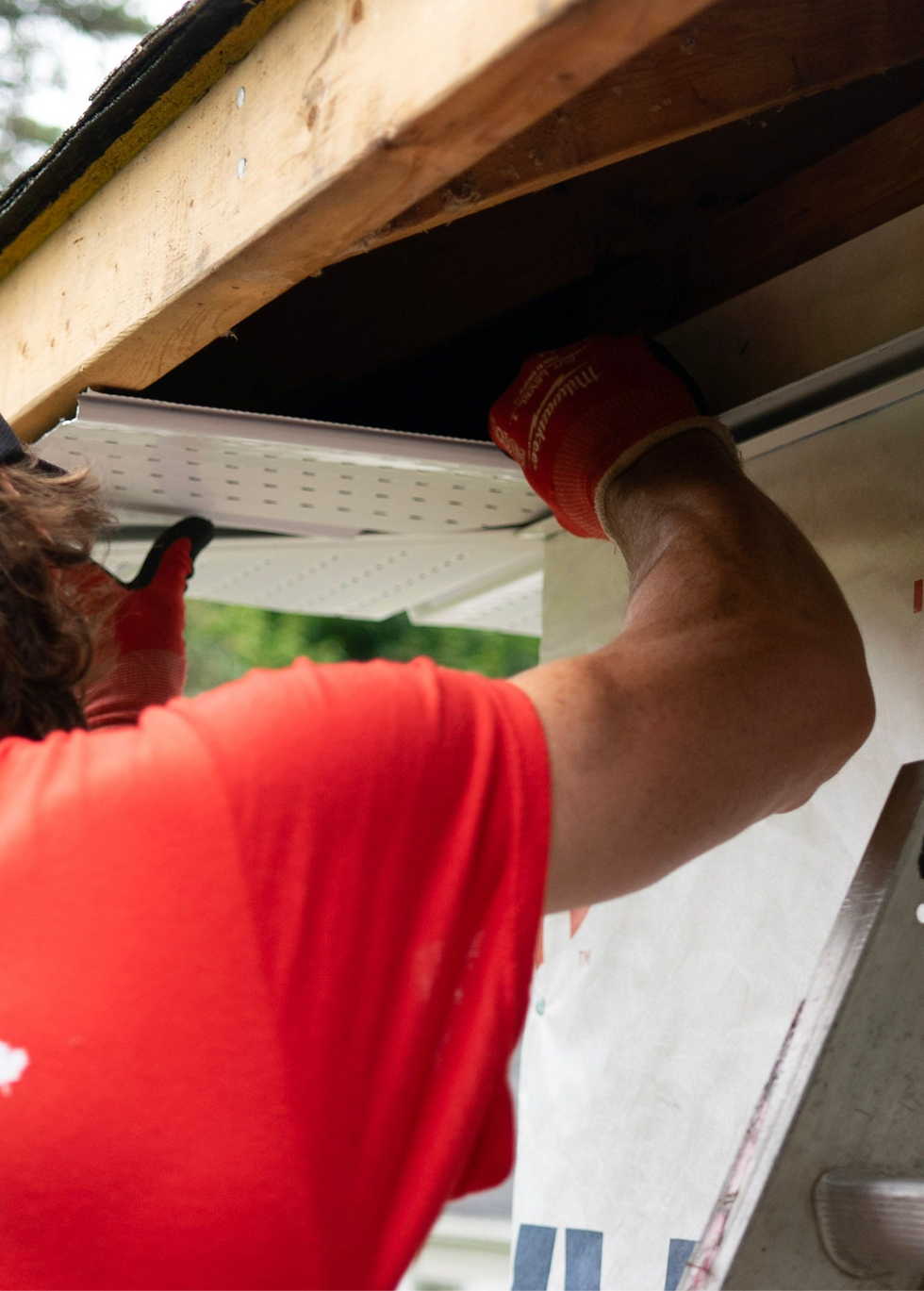
Most 2,000 square foot houses need between 150 and 200 linear feet of gutters. The exact count depends on your roof type, how far your eaves extend, and whether you have a porch or attached structure that needs its own drainage run. This guide walks you through the calculation step by step — so you know what you're working with before you call anyone.
If your gutters are already failing — pulling away, leaking at the seams, or sending water straight down the foundation — measuring for replacement is the right first step. If you just need a professional set of eyes, our gutter replacement team serves Westmont and the surrounding western suburbs.
Why Getting the Linear Footage Right Matters
An undersized gutter system backs up during heavy rain and overflows directly onto your landscaping and foundation. An oversized one wastes money on materials and installation. In the western suburbs, where storms can drop an inch of rain in under an hour, the margin for error is smaller than most homeowners expect.
Gutters are also the first line of defense against basement water intrusion. When water spills over a clogged or mismatched gutter and pools along the foundation, it finds every crack and seam. That's where basement waterproofing problems begin — and where replacing an undersized gutter system prevents a much larger repair down the road.

How to Calculate Linear Feet of Gutters for Your House
Follow these three steps to get a reliable number.
Step 1: Measure the perimeter of your roofline
Walk the outside of your house with a measuring tape and record the length of every horizontal eave — the edge where the roof overhangs the wall. Don't measure the rakes (the sloped sides of a gable); gutters attach to the eaves, not the rakes.
For a simple 50 ft × 40 ft rectangular house, that gives you a perimeter of 180 linear feet. On a gable roof, only two sides have horizontal eaves, so the gutter run is roughly 100 ft (two 50 ft sides). On a hip roof, all four sides slope to eaves, so all 180 ft may need gutters.
Step 2: Add for overhangs and additional structures
Roof overhangs extend the eave beyond the wall. Measure how far each overhang projects and add that footage for each side. A standard 6-inch overhang on a 50 ft side adds 50 ft of gutter length — same as the wall below it, because the gutter runs the full width of the eave.
Add separate runs for a porch, garage, or any attached structure with its own roofline.
Example calculation:
Basic perimeter (all eaves): 180 linear feet
Overhangs (approx. 10 ft per side × 4 sides): + 40 linear feet
Porch or additional structure: + 20 linear feet
Total estimated linear feet: = 240 linear feet
This example house — a 2,000 sq ft rectangular home with a hip roof, standard overhangs, and a front porch — needs approximately 240 linear feet of gutter material.
Step 3: Plan for downspouts
Downspouts aren't measured in linear feet the same way gutters are, but they affect how much gutter you need because they set the drainage intervals. Industry guidance calls for one downspout for every 25 to 35 linear feet of gutter. For a 180-ft gutter run, plan on at least five to six downspouts, placed so no run exceeds 40 linear feet without an outlet.
Quick Reference: Typical Linear Footage by Roof Type
Use this table as a starting estimate for a standard 2,000 sq ft house (50 ft × 40 ft footprint):
Gable roof (gutters on two eaves only): 100–120 linear feet
Hip roof (gutters on all four sides): 160–200 linear feet
Hip roof with overhangs and a porch: 220–260 linear feet
Add 15–20 ft per additional attached structure (garage, addition, pergola)
These are estimates. A complex roofline with multiple valleys, dormers, or a steeply pitched hip will push the number higher. When in doubt, measure each section individually and add them up — it takes fifteen minutes and prevents an expensive material shortage.
Gutter Size: 5-Inch vs. 6-Inch
Linear footage tells you how much material you need. Gutter width determines whether that material can handle your roof's drainage load.
5-inch K-style gutters handle roofs up to 5,520 square feet in most conditions — more than enough for a 2,000 sq ft house. 6-inch K-style systems are rated for roofs up to 7,960 square feet and handle higher-rainfall areas better. In northern Illinois, where spring and summer storms are heavy and short, upgrading to 6-inch is worth considering for any house on a sloped lot or with limited downspout spacing.
Most contractors default to aluminum for residential gutters — lightweight, rust-resistant, and available in a range of colors. Copper is a long-term investment (lasts 50+ years) but costs significantly more per linear foot. Vinyl is budget-friendly but brittle in freeze–thaw cycles, which makes it a poor choice for Illinois winters.
Gutter Replacement vs. Repair: Which Do You Actually Need?
If your gutters are leaking at a single seam or have one sagging section, a targeted repair often makes sense. If they're pulling away from the fascia in multiple places, rusting through, or more than 20 years old, replacement is usually the better financial decision — a patched 25-year-old aluminum gutter will need to come down within a few seasons anyway.
Signs that point toward full replacement:
Gutters separating from the roofline along more than one section
Visible rust, cracks, or holes in the channel
Persistent overflow even after cleaning
Water pooling along the foundation after rain
If you're seeing pooling near the foundation, fix the gutters first — then assess whether basement waterproofing is needed. In many cases, correcting the drainage eliminates the water problem entirely. In others, it's the first step before interior drainage or crack repair.
DIY or Professional Measurement?
The measurement itself is straightforward for a single-story house with a simple roofline. You need a tape measure, stable ladder, and about twenty minutes. For a two-story house, a complex hip roof, or a home with dormers and multiple valleys, having a professional measure and quote saves time and prevents the error of ordering the wrong linear footage.
Professional installation also ensures correct pitch — gutters need to slope approximately ½ inch for every 10 feet of run toward the downspout. Too flat and water sits and breeds mosquitoes. Too steep and it looks wrong and can pull away from the fascia faster. Getting the pitch right on a long run across an uneven roofline is harder than it looks from the ground.
"Homeowners are often surprised by how much linear footage a standard ranch house needs once you account for overhangs and a porch. We always measure twice before ordering — a short-count on a seamless system means another job day to splice in the missing section." — The Accu-Dry team, Westmont, IL
Frequently Asked Questions
Q: How many linear feet of gutters does a 2,000 square foot house need?
A: Most 2,000 sq ft homes need 150–200 linear feet of gutters, depending on roof type. A simple gable roof needs gutters on two eaves (roughly 100–120 ft for a 50×40 footprint). A hip roof needs gutters on all four sides, pushing the count to 160–200 ft. Add overhangs and additional structures and you may reach 220–260 ft.
Q: How do I measure linear feet of gutters myself?
A: Walk the perimeter of your house and measure each horizontal eave from end to end. Add runs for any overhangs that extend the eave beyond the wall, and add separate measurements for any porch, garage, or addition with its own roofline. Sum the total for your linear footage estimate.
Q: How many downspouts does a 2,000 sq ft house need?
A: Plan on one downspout for every 25 to 35 linear feet of gutter, and never run more than 40 linear feet between outlets. For a house with 180–200 ft of gutter, that means five to seven downspouts.
Q: What size gutters does a 2,000 sq ft house need?
A: 5-inch K-style aluminum gutters handle the drainage load of a 2,000 sq ft house in most conditions. In high-rainfall areas or on steeply pitched roofs, 6-inch K-style provides extra capacity. Illinois storm patterns — heavy, fast, and seasonal — make 6-inch a reasonable upgrade for most homes in the western suburbs.
Q: How much does gutter replacement cost for a 2,000 sq ft house?
A: Cost depends on linear footage, material, and the complexity of your roofline. For a free, written estimate with no obligation, call Accu-Dry at (630) 663-4598.
Q: Can I install gutters myself on a 2,000 sq ft house?
A: For a single-story house with a simple roofline, experienced DIYers can tackle gutter installation. The challenge is getting the pitch right — gutters need to slope ½ inch per 10 feet toward the downspout — and working safely on a ladder at roofline height. Two-story houses and complex rooflines are better left to a professional.
Get a Free Estimate for Gutter Replacement in Westmont
If you've measured your linear footage and are ready to move forward — or you'd rather have a professional handle the measuring and quoting — Accu-Dry can help. We serve Westmont, Downers Grove, Naperville, and the surrounding western suburbs. Family-owned since 1990, with 5 stars across hundreds of reviews.
Call (630) 663-4598 or request a free quote online. We come out, measure, and give you a written fixed-price estimate — no surprises, no pressure.
Comments